
'...what we’re trying to do is inspire change through the lens of wonder.' Mike Gunton
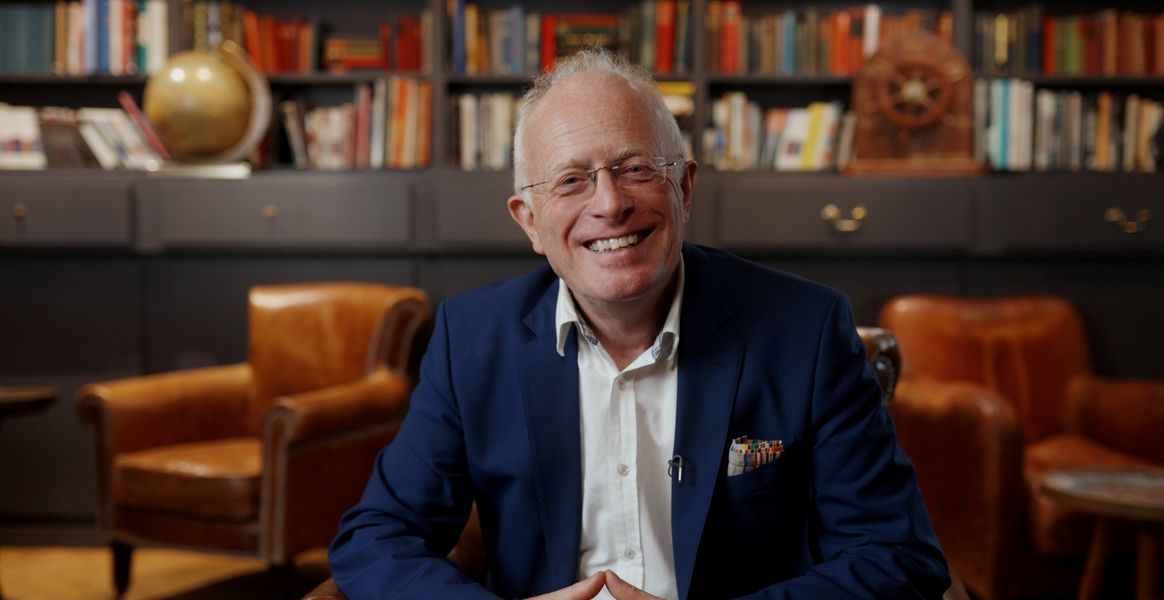
When Eventim UK were offered the chance to interview Executive Producer of Planet Earth III and host of the upcoming Planet Earth III Live in Concert experience - Mike Gunton, we couldn’t wait to compile our questions. With the tour taking place this October in London and Manchester, our conversation was filled with fascinating insights into the filming process, the cutting-edge technology behind the series, and the creation of the immersive concert experience. Mike’s passion and enthusiasm for his work is truly awe-inspiring, reflecting not just a deep love for the natural world, but also a genuine commitment to sharing its wonders with audiences everywhere. After overcoming a few mild technical difficulties, we dove into our long list of questions—though in typical fashion, we ended up chatting so much that we barely scratched the surface!
1. What were the main objectives and themes you wanted to explore for Planet Earth III and how did it build upon the previous series?
Planet Earth, as a brand, has a distinct DNA. At its core, it celebrates the wonder of our planet, the animals and plants that inhabit it, and how they adapt to their environments. This drives the dramatic behaviours and life challenges we observe, often creating a deep sense of empathy. Through the experiences of these animals, we connect with the challenges they face, and this theme runs through all the Planet Earth series. However, each iteration of Planet Earth has taken a slightly different perspective on this overarching concept.
The first Planet Earth was more about observing from a distance, almost from a divine perspective, as if viewing the epic dramas of life from Mount Olympus. It provided a grand, sweeping view of natural events. In contrast, Planet Earth II brought us much closer to the animals' world, offering an intimate perspective from their point of view. This approach increased the intensity, making the experience less epic in scale but far more dramatic. Planet Earth III incorporates all these elements. It still showcases extraordinary beauty and wonder, but it also explores how life is adapting to a rapidly changing world. We now realise that the impact of humanity on nature is omnipresent, and it's impossible to view nature without acknowledging this influence. In this series, we sought to examine the resilience and adaptability of nature, particularly how it has been affected by a world increasingly dominated by human activity—arguably the most powerful natural force ever to exist on Earth. This perspective is incredibly compelling, as nature is extraordinarily adaptable, and throughout the series, we see how animals are altering their behaviours, sometimes even taking advantage of this new world. This is the fascinating aspect of nature and evolution: while we often think of evolution as a process that takes millions of years, adaptation and behavioural evolution can occur within a generation or even less. There are some fantastic examples of this in the series.
Planet Earth III is full of surprises and wonder. It delivers the three key elements I aim for in all my work: drama, spectacle, and surprise. However, there's an added layer of thought-provoking perspective. It compels viewers to consider how all this is happening in a world undergoing rapid change, driven largely by human activity.
One aspect I hadn’t mentioned earlier is how our approach to showcasing the wonders of nature is also evolving. For instance, there's a sequence in the first episode of Planet Earth III, filmed in Cape Town, that illustrates how seals are changing their behaviour. As the number of great white sharks increases, seals are forced to adapt. The story that unfolds shows seals turning on the great whites, demonstrating a remarkable example of nature’s adaptability in response to changing conditions.
2. Can you share some challenges and triumphs you experienced during the production of Planet Earth III particularly in capturing never-seen-before animal behaviours?
One of the promises we make with Planet Earth—whether it’s I, II, or III—is that we’ll take you to places you’ve never been and show you animals you wouldn’t normally get to see. We aim to use the camera to reveal things your eyes could never capture on their own. That’s where the technology comes in, and the miniature drones we’ve used have been absolutely game-changing.
The audience expects to see new things—they want us to fulfil our promise to show them extraordinary sights. That’s the challenge. Of course, with each new instalment of Planet Earth, we’ve already covered a lot of ground. So, finding new stories and discovering fresh ways to tell them becomes increasingly difficult, and the bar keeps getting higher. But that’s a challenge we love. The real triumph comes when we uncover stories that no one’s ever seen before or that were previously impossible to film.
Can you give us an example?
One of the things I find particularly thrilling are those ‘holy grail’ stories. You wonder, can we really do that? Is it possible? Technically, it might seem impossible; logistically, it could be a nightmare; or scientifically, we might not know enough. But then, when everything aligns—when the technology, logistics, and science come together, when the experts studying these animals finally understand what’s happening—that’s when we can say, right, now we can go and film it.
In the "Extremes" episode, which, by the way, has been nominated for a photography Emmy, Theo Webb and his team explored some of the most remote places on Earth, particularly on Ellesmere Island in Canada. We told the story using drones in a way that hasn’t really been done before, especially with this kind of tracking we used. It’s awe-inspiring and visceral; it takes you back to nature at its most fundamental. The photography is absolutely jaw-dropping. That’s a real triumph.
One thing I’m particularly proud of with this series is that, for the first time in my career, all the producers are from the next generation, not mine. They’re young filmmakers, and they bring a different perspective on the challenges our planet is facing—conservation, climate change, and so on. They’re very attuned to making sure these issues are evident in the series. My job is to ensure they don’t overdo it. There’s also a strong presence of women working on this series, and I think there’s often a different storytelling perspective that comes from a female director, and an important one at that.

3. How has the advancement of technology, such as drone and camera technology, enhanced storytelling and the visual experience?
Well, I think there are a few key areas where technology has really made a difference. One of the most important is proximity. What we've tried to do—and I think Planet Earth is quite unique in this regard—is to bring the audience as close to the action as possible. That’s not just about being technically and visually close, but also emotionally close. The clever thing we do, and I think we do it very well, is to keep those two elements constantly intertwined.
Of course, we’re all a bit tech-obsessed, and it’s easy to get caught up in the gadgets and ask, “Does it deliver?” But there’s another side to it—the perspective of how best to visualise what’s happening. Take, for example, the thermal camera. In the opening episode, there’s a sequence with lions hunting on the beaches of the Namib, which offers an interesting perspective. This is actually a positive story in some ways, as the persecution of lions in that area has decreased, so they’re beginning to explore new territories. We didn’t really expect them to venture onto beaches, and the story here is about these particular lions, who were almost like novices. They didn’t really know what they were doing because this isn’t their typical hunting ground.
If we’d only filmed them during the day, we might have said, “Well, this is actually quite a dull sequence.” But then we switched to night photography, using a more sophisticated type of thermal camera called a Selex camera. Suddenly, everything changed. You see these lions trying to learn how to hunt seabirds—something they’d never normally do. The seabirds come in to roost at night, wake up in the morning, and suddenly there’s a flipping lion running around. You’re witnessing a completely new interaction, with lions figuring out how to hunt birds. It’s like watching evolution in real time.
We were able to capture this thanks to a piece of technology that opens a window into a world we could never normally see—or didn’t even know existed.
The big breakthrough for us was using drones instead of helicopters, which were the hallmark of earlier Planet Earth series. With drones, we can now get into positions that would have been impossible for a camera operator, as the animals would spot you. Think about using a drone in that way—it suddenly gives you an active camera that gets you close to the action, allowing you to witness behaviour that you’d never be able to see otherwise. It’s a completely immersive experience, and while it was a game-changer for natural history filmmaking in general, it was particularly transformative for Planet Earth III.
4. What were the main creative challenges and opportunities in adapting the Planet Earth III series for a live concert experience?
Well, there are definitely technical challenges, though I'm pleased to say I don't have to get too involved in those. Just the logistics of projecting that material onto these insanely huge, high-quality screens and then moving them from location to location is clearly a massive technical feat. But for me, it’s all about the opportunity. It’s incredibly exciting as a filmmaker to find new ways to immerse audiences in the natural world, especially when your eye simply can’t escape the screen. It’s so big that you’re completely wrapped up in it—it’s very powerful, very intense.
When people are watching at home on the television, there are lots of stimuli—pictures, music, sound effects, different voices—all contributing to the experience. But with the live concert experience, it’s stripped back. You’re left with just your eyes and ears, and you get the full impact. It’s genuinely moving, and I mean that in two senses. You’re watching it in a very unique situation. Normally, you’d be watching the show on someone’s phone or with your family, and it’s all quite small-scale. But when you enter that concert hall, you’re sharing the experience with thousands of people, and it becomes a collaborative experience.
5. Can you share your thoughts on the importance of combining environmental conservation messaging with artistic performances?
I mean, it’s clearly important because we’re facing a climate emergency and a biodiversity crisis. But that’s not the primary purpose of the concert. The purpose is to experience, fall in love with, and remind people of the wonder of the natural world. However, as a consequence, it’s thought-provoking. You see the fragility of our world, and as a member of the audience, you feel like you're part of the solution. You think, “I can do something. I can maybe just alter the way I live, even in a small way,” and that makes a difference.
So, to give a short answer to your question, it’s incredibly important. But what we’re trying to do is inspire change through the lens of wonder.
6. Can you discuss the process of working with award-winning composer Hans Zimmer and his team to create an immersive and impactful concert experience?
Well, working with Hans and The Bleeding Fingers team on Planet Earth is an absolute joy. They’re brilliant musicians who truly understand the role of music in this work—how it complements the visuals rather than dominates them.
In the In Concert Experience, the music takes centre stage a bit more than it does in the TV shows—it is, after all, a concert. And I don’t know if you’ve ever been to a Hans Zimmer concert, but they are absolutely incredible. The show is amazing, and he and his team really know how to put on a performance. Learning from them and leveraging their experience helps make this feel like a big music event. The music has been specially arranged to suit a concert environment, not just narratively and structurally, but also physically, for the concert setting.
Matthew Freeman, the conductor, worked with me on Planet Earth II, and he really knows his stuff. What’s great is that Matthew, Hans, and the whole team are making music for nature—they understand it deeply and want to add their musical voice to telling the story of the natural world. If you don’t connect with and understand nature, the music you write won’t resonate in the way it does when you do. That’s why it’s so powerful.
7. If you could have any celebrity join the crew for a day of filming, who would you pick and why?
It would definitely have to be Tom Hanks. I’ve recently had the chance to film with him, and the thing about Tom is that he truly wants to get involved. He’s the type of person who will carry the tripod and is genuinely curious about what’s happening. He’s easy-going, enjoyable to work with, and always willing to lend a hand.