Bob Dylan tickets at Eventim.co.uk, your link to everything Bob Dylan, concerts, tours, tickets, news and reviews.
Bob Dylan is one of the most influential singer-songwriters in music history, renowned for transforming popular music through his poetic lyrics, distinctive voice, and fearless artistic evolution. Since emerging from the American folk scene in the early 1960s, Dylan has written some of the most enduring songs of all time, including "Blowin' in the Wind," "Like a Rolling Stone," "The Times They Are A-Changin'," and "Knockin' on Heaven's Door." Across a career spanning more than six decades, he has released a remarkable catalogue of critically acclaimed albums, earned multiple Grammy Awards, received the Presidential Medal of Freedom, and became the first songwriter to be awarded the Nobel Prize in Literature for his profound contribution to the art of songwriting.
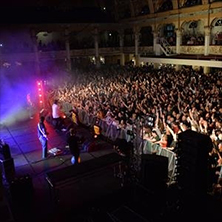
Live, Bob Dylan continues to captivate audiences with performances that celebrate his unparalleled musical legacy while embracing constant reinvention. His concerts blend timeless classics with carefully selected deep cuts and newer material, often presented through fresh arrangements that reflect his ever-evolving artistic vision. Backed by an accomplished band, Dylan creates an atmosphere that focuses on musicianship, storytelling, and the enduring power of his songs, making every performance a unique experience for concertgoers.
For fans of folk, rock, blues, Americana, and exceptional songwriting, a Bob Dylan concert is an opportunity to witness one of the most significant artists in modern music. His extraordinary influence on generations of musicians, combined with a catalogue of songs that have shaped popular culture around the world, continues to make Bob Dylan's live performances essential events for music lovers everywhere.
Bob Dylan tickets here at Eventim.co.uk. Sign up to the Bob Dylan Ticket Alarm to be updated with the latest Bob Dylan tickets and tours.