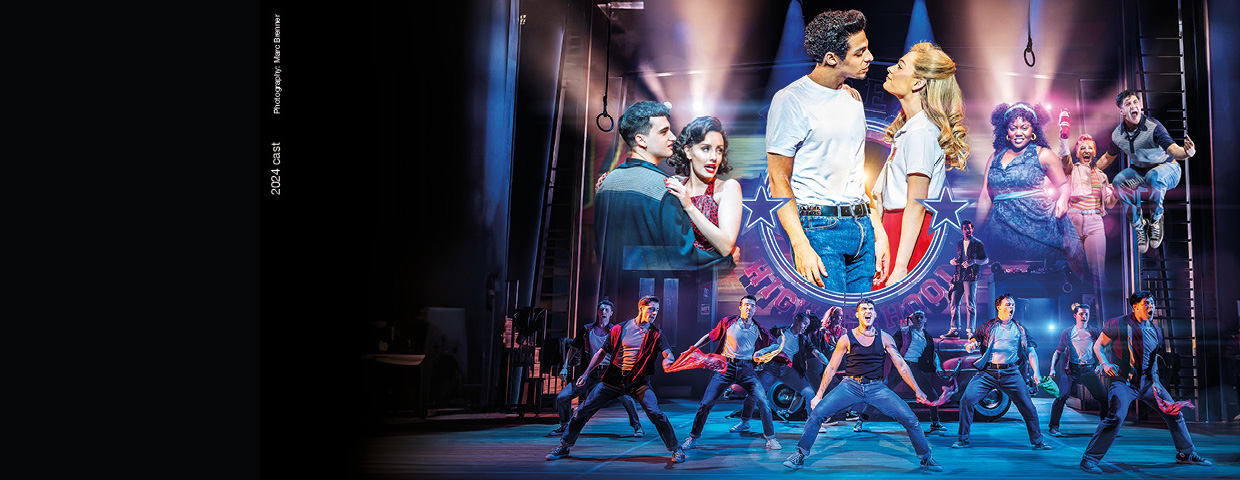
Grease is a popular stage musical that celebrates the culture, music, and youthful energy of American teenagers in the late 1950s. Created by Jim Jacobs and Warren Casey, the show first appeared in Chicago in 1971 before moving to Broadway in 1972. Inspired by the writers’ own experiences growing up in Chicago, the musical combines humor, romance, and rock-and-roll music to tell a nostalgic story about high school life, friendship, and the desire to fit in. Over time, Grease became one of the most recognizable and frequently performed musicals in the world.
The story takes place at the fictional Rydell High School during the 1958–1959 school year. It follows the summer romance between Danny Zuko, a confident leader of the school’s greaser gang known as the Burger Palace Boys, and Sandy Dumbrowski, a sweet and innocent transfer student. During the summer the two share a romantic connection at the beach, but when school begins they discover that their personalities and social expectations make their relationship complicated. Danny feels pressure to maintain his tough reputation with his friends, while Sandy struggles to understand the bold and rebellious culture of her new school.
Throughout the musical, the lives of several students at Rydell High intertwine. The Pink Ladies, a group of stylish and outspoken girls led by Betty Rizzo, provide humor and attitude while navigating their own relationships and insecurities. Characters such as Kenickie, Frenchy, Marty, and Jan each contribute to the lively social world of the school. Their interactions highlight common teenage experiences such as peer pressure, identity, romance, and dreams for the future. While the show often presents these themes with comedy and upbeat music, it also reveals moments of vulnerability among the characters.
Music plays a central role in Grease, reflecting the influence of 1950s rock and roll, rhythm and blues, and early pop music. Songs like “Summer Nights,” “Greased Lightnin’,” “Look at Me, I’m Sandra Dee,” and “We Go Together” have become widely known and are often associated with the musical’s energetic spirit. The score captures the excitement and rebellious style of teenage culture during the era, helping audiences connect emotionally with the characters and their experiences. The music also helps move the story forward, expressing the characters’ hopes, conflicts, and relationships.
The musical’s popularity expanded greatly after the release of the 1978 film adaptation starring John Travolta as Danny and Olivia Newton-John as Sandy. The film introduced new songs and reached a global audience, making Grease a lasting cultural phenomenon. Since then, the stage musical has been revived many times on Broadway and in theaters around the world, as well as frequently performed by schools and community theater groups.
Today, Grease remains a symbol of youthful rebellion, nostalgia, and the enduring appeal of classic rock-and-roll style. Its memorable characters, catchy songs, and themes of love and belonging continue to resonate with audiences decades after its creation. By blending humor, music, and heartfelt storytelling, the musical captures a lively portrait of teenage life and the universal challenge of discovering who you are while trying to find your place among others.